
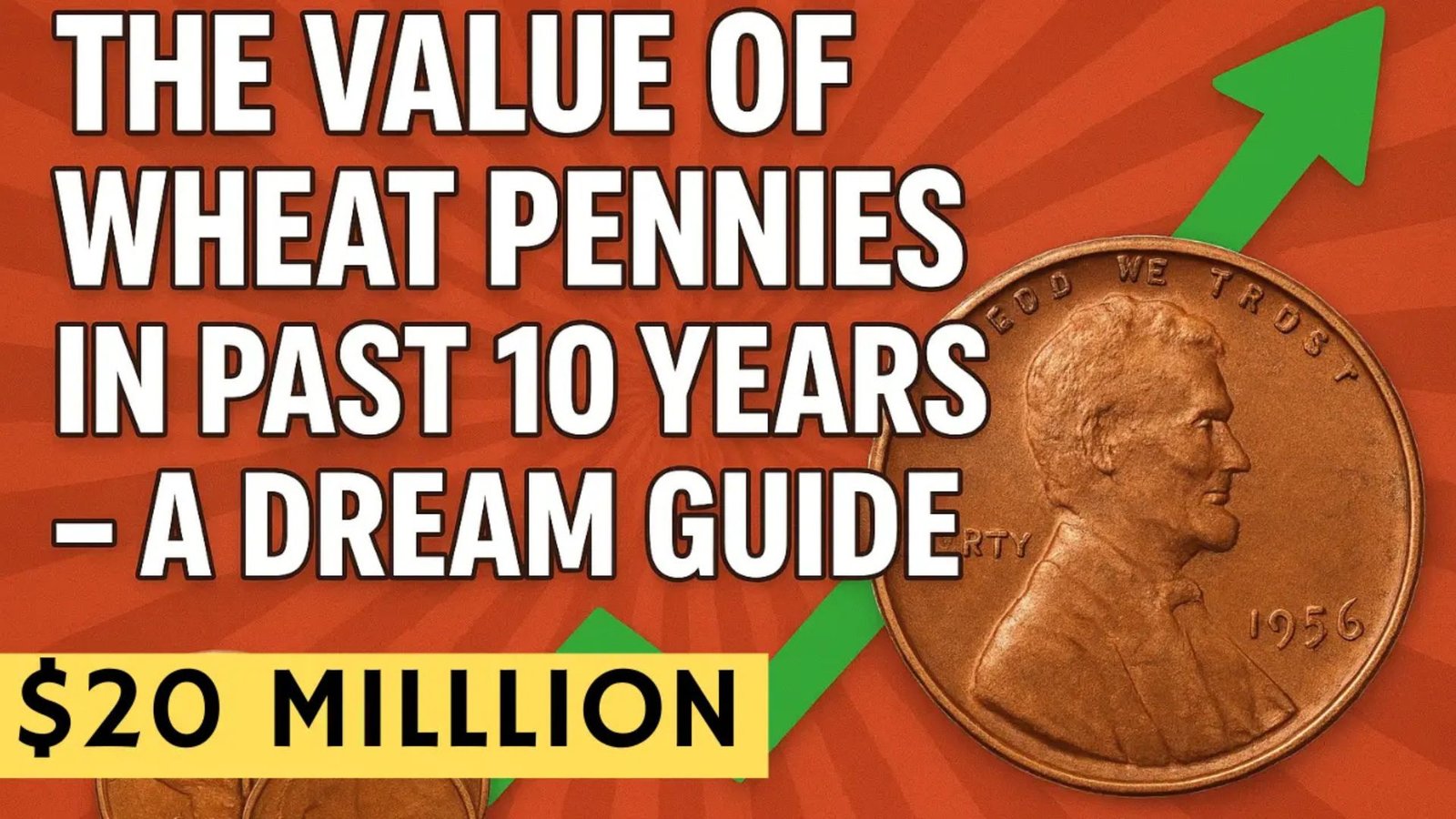
They say every penny counts, but few imagine one could be worth hundreds—or even thousands. Over the past decade, Wheat Pennies have transformed from nostalgic collectibles into miniature treasures that spark bidding wars and collector dreams. Let’s dig deep into how these humble copper coins became some of the most valuable small-change investments of the century.
What Are Wheat Pennies? The Hidden Story Behind Their Design
Introduced in 1909, Wheat Pennies (or Lincoln Cents) were designed by Victor David Brenner to commemorate Abraham Lincoln’s 100th birthday. The reverse shows two wheat stalks—symbols of growth and prosperity—hence the nickname “Wheat Penny.” Minted until 1958, they’ve since become icons of American coinage, loved by collectors and historians alike.
A Decade of Discovery: Wheat Penny Values from 2015–2025

Over the last ten years, interest in Wheat Pennies has surged. Auction records, collector forums, and online marketplaces reveal a clear trend—prices have steadily climbed for key dates and mint errors. From garage sales to estate finds, collectors have uncovered coins once worth a cent, now valued in hundreds.
Average Value Growth of Key Wheat Pennies (2015–2025)
| Year | Common Circulated | Rare Key Date | Mint Error Varieties | High-Grade Uncirculated |
|---|---|---|---|---|
| 2015 | $0.10–$1 | $50–$300 | $100–$500 | $100–$700 |
| 2020 | $0.20–$2 | $75–$500 | $150–$900 | $200–$1,200 |
| 2025 | $0.30–$5 | $100–$800+ | $250–$1,500+ | $400–$2,000+ |
Why Wheat Pennies Have Skyrocketed in Value
Three factors fuel their modern appeal: scarcity, nostalgia, and the thrill of discovery. The end of the copper era and the rise of digital coin marketplaces have turned once-overlooked Wheat Pennies into star collectibles. Many collectors chase the 1909-S VDB, 1914-D, and 1943 Copper Penny, each fetching thousands in pristine condition.
Notable Records That Shocked Collectors
In 2021, a 1943 Bronze Wheat Penny sold for nearly $1.75 million—a jaw-dropping price for a one-cent coin. Similarly, the 1909-S VDB in mint state crossed the $3,000 mark, and pristine 1955 Doubled Die examples often hit $10,000+. Such figures have inspired a new generation of coin hunters to check their jars and drawers for hidden gems.
Record Wheat Penny Sales (Last 10 Years)
| Coin Type | Auction Year | Grade | Final Sale Price |
|---|---|---|---|
| 1943 Bronze Wheat Penny | 2021 | MS63 | $1.75 million |
| 1909-S VDB Lincoln Cent | 2020 | MS65 | $3,200 |
| 1955 Doubled Die Penny | 2019 | MS64 | $10,200 |
| 1914-D Wheat Cent | 2023 | AU58 | $1,850 |
How to Spot a Valuable Wheat Penny

Collectors look beyond dates and mintmarks. Condition, errors, and toning play huge roles in value. Here’s what to check:
- Mintmark: Coins with “S” (San Francisco) or “D” (Denver) can be rarer.
- Errors: Look for doubled dies, off-center strikes, or planchet flaws.
- Condition: Uncirculated or “red” copper tones increase desirability.
- Authentication: Get coins graded by PCGS or NGC for verified value.
Expert Tips for Collectors
- Handle Carefully: Oils from fingers can tarnish copper. Use cotton gloves.
- Avoid Cleaning: Cleaning can destroy numismatic value.
- Store in Cool, Dry Spaces: Prevent oxidation and color fading.
- Research Before Selling: Prices vary daily; check multiple sources.
- Join Coin Communities: Engage with other collectors for insights and updates.
FAQs About Wheat Pennies
Q: Are all Wheat Pennies valuable?
No, only rare dates, mint errors, or high-grade coins have significant value. Most are worth a few cents to a few dollars.
Q: How can I tell if my Wheat Penny is rare?
Check the date, mintmark, and for any doubling or misprints. Coins like 1909-S VDB or 1943 Bronze are especially valuable.

Q: Where can I sell Wheat Pennies?
Certified dealers, online auction sites, or coin shows are the safest platforms.
Conclusion: The Dream of Finding a Treasure in Your Change
The past decade has shown that Wheat Pennies aren’t just old coins—they’re stories cast in copper. Their rise in value proves that small discoveries can lead to big rewards. Whether you’re a seasoned numismatist or a curious beginner, your next penny find might just make history. So, next time you spot a Wheat Penny, take a closer look—you could be holding a piece of American legacy worth far more than a cent.