
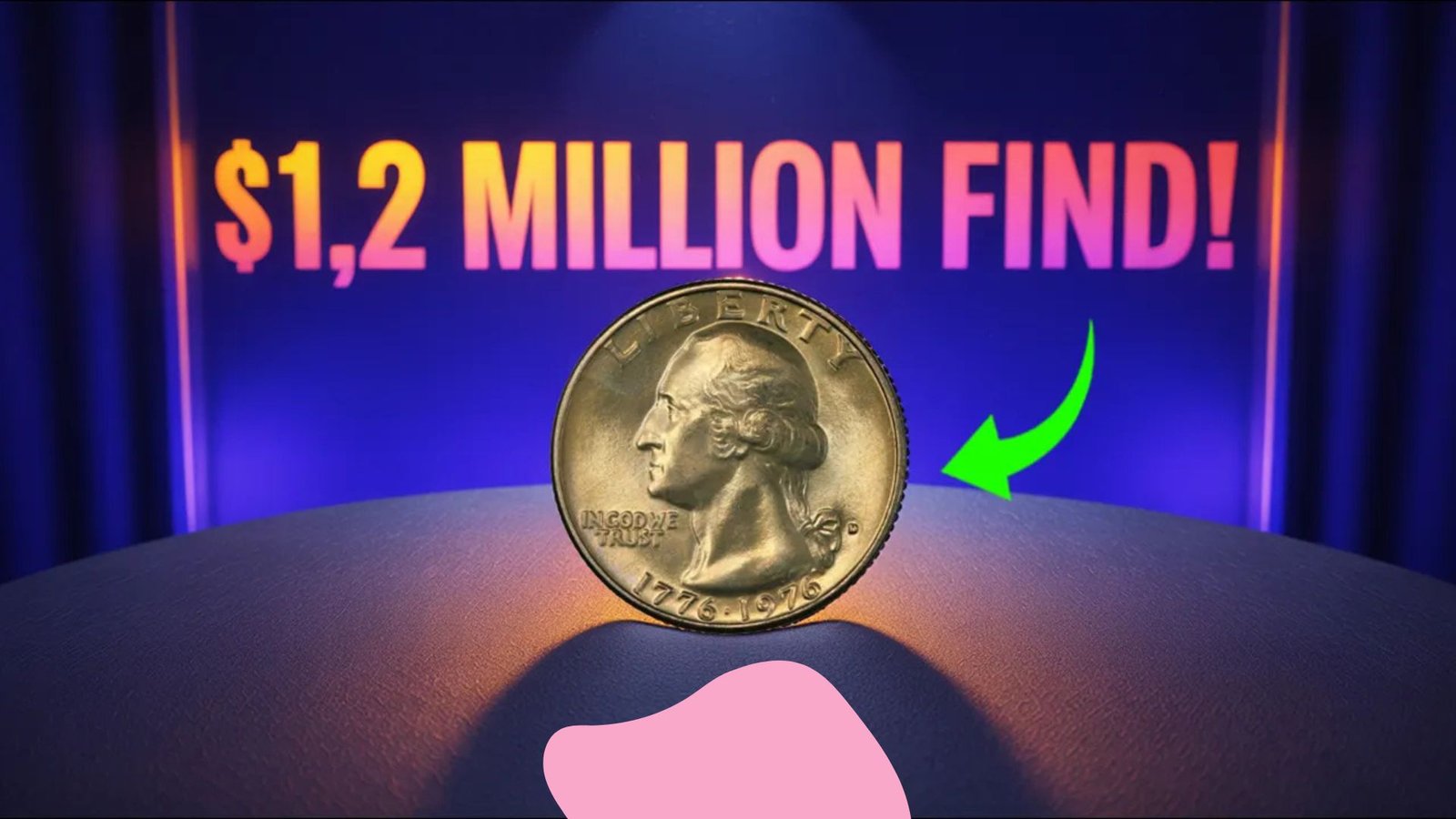
The 1976 Bicentennial Quarter is more than just a piece of pocket change—it’s a collector’s dream that recently shocked the numismatic world with a jaw-dropping $3.1 million valuation. This iconic coin, minted to celebrate America’s 200th anniversary, has captured the attention of collectors and enthusiasts alike. But what makes this quarter so valuable?
we’ll break down the fascinating story of the 1976 Bicentennial Quarter, why it’s worth millions, and how you can spot one.
What Is the 1976 Bicentennial Quarter?

The 1976 Bicentennial Quarter was created to honor the United States’ 200th anniversary of independence. Unlike regular quarters, this coin features a unique design: a colonial drummer on the reverse and the dual date “1776-1976” on the obverse. Minted in large quantities, most of these quarters are worth only their face value of 25 cents. However, a rare version of this coin has skyrocketed in value, leaving collectors in awe.
Why Is This Quarter So Special?
Certain 1976 Bicentennial Quarters stand out due to their rarity, condition, or unique features. The $3.1 million valuation came from a specific quarter that was in pristine condition and had rare characteristics, making it a one-of-a-kind find. Let’s explore what sets these valuable quarters apart.
Key Features of the $3.1 Million Bicentennial Quarter
To understand why this 1976 Bicentennial Quarter fetched such a high price, you need to know what collectors look for. Here are the main factors that make this coin so valuable:
| Feature | Description |
|---|---|
| Mint Mark | Quarters with the “S” mint mark (from San Francisco) are often more valuable. |
| Material | Some rare quarters were struck in 40% silver, unlike the standard copper-nickel. |
| Condition | Coins in near-perfect condition (graded MS-70 or close) are highly sought after. |
| Errors | Minting errors, like double strikes or misaligned designs, increase value. |
| Rarity | Unique variations or low-mintage coins are prized by collectors. |
The Role of Mint Marks

The mint mark indicates where the coin was made. Most 1976 Bicentennial Quarters were minted in Philadelphia (no mint mark) or Denver (“D” mint mark). However, a small number were produced in San Francisco with an “S” mint mark, especially in silver. These San Francisco coins are rarer and often more valuable, especially if they’re part of a proof set.
Silver vs. Copper-Nickel
While most 1976 Bicentennial Quarters are made of copper-nickel, some were struck in 40% silver for special collector sets. These silver quarters are more valuable due to their precious metal content and limited production. The $3.1 million quarter was likely one of these silver versions, combined with exceptional condition and unique features.
Condition Matters
Coin collectors use a grading scale from 1 to 70 to assess a coin’s condition. A 1976 Bicentennial Quarter in near-perfect condition (MS-68 or higher) can command a premium price. The $3.1 million quarter was likely graded at or near MS-70, meaning it had no visible flaws, even under magnification.
Minting Errors

Some 1976 Bicentennial Quarters have errors, such as double-struck designs or off-center strikes. These imperfections make the coin unique and highly desirable. The million-dollar quarter may have had a rare error that set it apart from others.
The Story Behind the $3.1 Million Valuation
The 1976 Bicentennial Quarter that sold for $3.1 million was likely part of a high-profile auction. Its value came from a combination of factors: a rare silver composition, flawless condition, and possibly a unique minting error. Auction houses like Heritage Auctions or Sotheby’s often see such coins fetch record-breaking prices when collectors compete for them. This particular quarter shocked the numismatic community, as few expected a bicentennial coin to reach such a price.
Why Did It Shock Collectors?
Most 1976 Bicentennial Quarters are common, with millions still in circulation. The idea that one could be worth millions was unthinkable to many collectors. The discovery of this ultra-rare quarter has sparked renewed interest in checking pocket change for hidden treasures.
How to Spot a Valuable 1976 Bicentennial Quarter
Think you might have a 1976 Bicentennial Quarter worth thousands or even millions? Here’s how to check:
- Look for the Mint Mark: Check the obverse (front) of the coin, just below the date. An “S” mint mark indicates it was made in San Francisco, which could mean it’s a silver version.
- Inspect the Material: Silver quarters have a shinier, more reflective surface compared to copper-nickel ones. A magnet test can help—silver coins won’t stick to a magnet.
- Check for Errors: Look for unusual features like double strikes, misaligned designs, or missing elements. These errors can significantly increase value.
- Examine the Condition: Use a magnifying glass to check for scratches, wear, or damage. Coins in pristine condition are worth more.
- Get It Graded: Professional grading services like PCGS or NGC can evaluate your coin’s condition and authenticity, giving you an accurate value.
Where to Find These Quarters
You might find a 1976 Bicentennial Quarter in:
- Pocket change or old coin collections
- Estate sales or flea markets
- Coin shops or online marketplaces like eBay
- Inherited coin collections from family members
Tips for Selling a Valuable Quarter
If you think you’ve found a valuable 1976 Bicentennial Quarter, follow these steps to maximize its value:
- Get It Appraised: Take your coin to a reputable coin dealer or grading service for a professional evaluation.
- Avoid Cleaning: Cleaning a coin can reduce its value. Leave it in its natural state.
- Research Auctions: High-profile auction houses can help you sell rare coins for top dollar.
- Store It Safely: Keep the coin in a protective holder to prevent damage.
Why Collectors Are Obsessed with the 1976 Bicentennial Quarter
The 1976 Bicentennial Quarter represents a piece of American history, celebrating the nation’s 200th anniversary. Its unique design and the possibility of finding a rare, valuable version make it a favorite among collectors. The $3.1 million sale has only fueled this obsession, inspiring people to search their change jars for a hidden gem.
The Future of Bicentennial Quarters
As more collectors learn about the 1976 Bicentennial Quarter’s potential value, demand for rare versions is likely to grow. This could drive prices even higher for coins in top condition or with unique errors. Now is the perfect time to start checking your quarters!
Conclusion
The 1976 Bicentennial Quarter that sold for $3.1 million has redefined what pocket change can be worth. With its unique design, rare silver composition, and potential for minting errors, this coin is a collector’s dream. By knowing what to look for—mint marks, material, condition, and errors—you might discover a valuable quarter in your own collection. Start checking your coins today, and who knows? You could be holding the next million-dollar 1976 Bicentennial Quarter!