
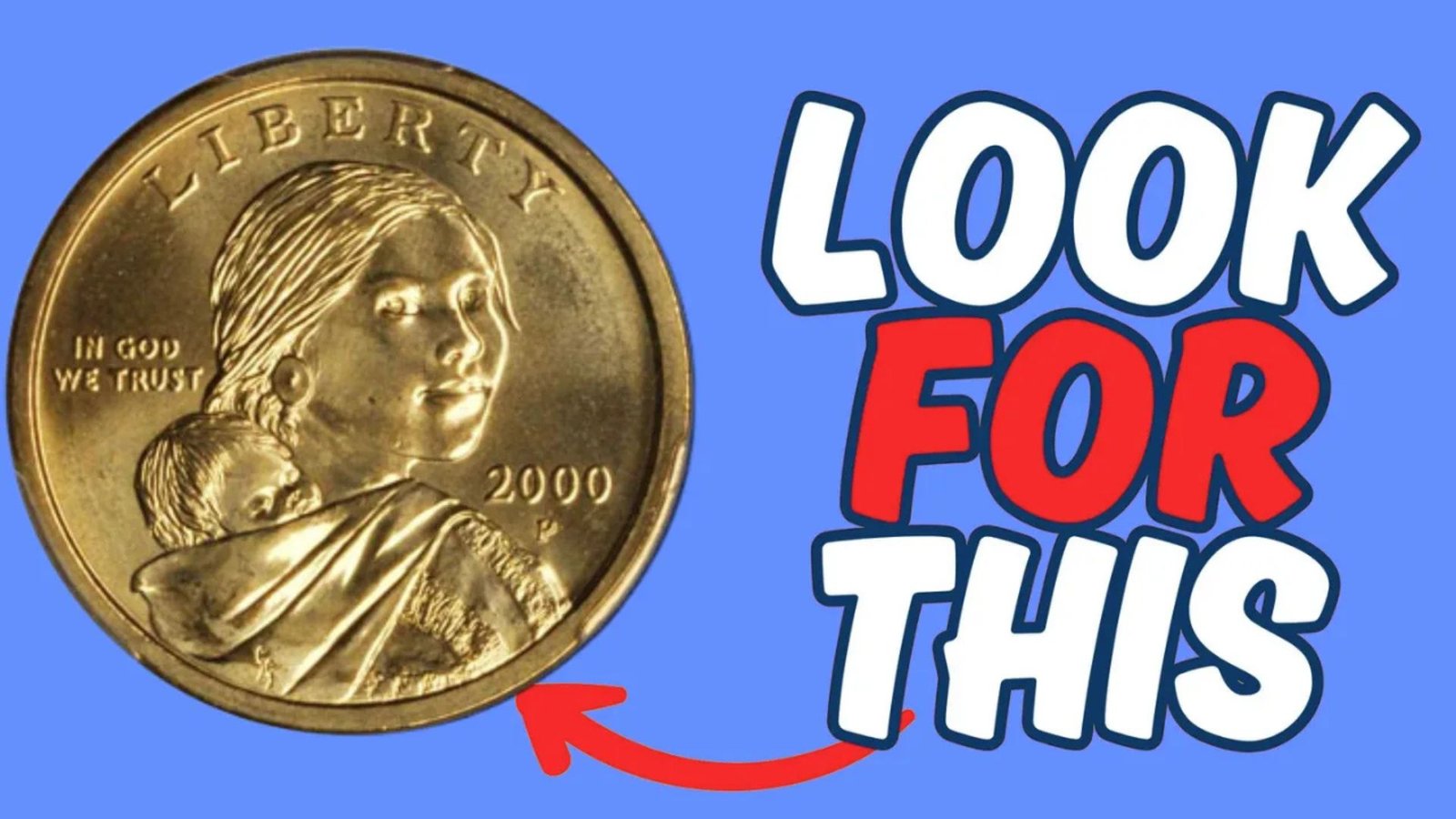
Have you ever pulled a shiny golden dollar from your pocket and wondered if it’s more than just loose change? The rare Sacagawea dollar could be your ticket to a fortune. Introduced in 2000 to honor the brave Native American guide from the Lewis and Clark expedition, these coins look ordinary but hide secrets that collectors crave. While most are worth just one buck, a handful of special versions – thanks to minting mistakes or limited releases – can fetch sky-high prices.
In fact, one rare Sacagawea dollar sold for a jaw-dropping $2.21 million in a recent auction. Imagine turning your coffee money into a dream home! In this guide, we’ll break down everything in simple terms: the history, what makes one rare, and easy steps to check your coins. Whether you’re a newbie collector or just curious about rare Sacagawea dollars, this could change how you look at spare change forever. Let’s dig in!
What Is the Sacagawea Dollar? A Quick History Lesson

The Sacagawea dollar hit U.S. pockets in January 2000, replacing the clunky Susan B. Anthony dollar that folks often mixed up with quarters. Made from a special mix of copper and zinc, it has a golden hue but isn’t real gold – that’s what gives it that eye-catching shine without the high cost.
On the front (called the obverse), you’ll see a portrait of Sacagawea cradling her baby, Jean Baptiste, with flowing hair and a calm gaze. She was a real hero: a young Shoshone woman who helped explorers Meriwether Lewis and William Clark map the American West in 1804-1806. The back (reverse) shows a soaring eagle with detailed feathers, symbolizing freedom.
Millions of these coins were made at mints in Philadelphia (no mint mark or “P”) and Denver (“D”). They were meant for everyday use, but low popularity kept most out of circulation. Today, they’re easy to find in jars or vending machines. But here’s the exciting part: not all are common. Some slipped through with tiny errors or as promo items, turning them into rare Sacagawea dollars worth thousands – or even millions.
Why Is the Rare Sacagawea Dollar So Valuable? The Secrets Behind the $2.21 Million Price Tag

Value in coins comes from rarity, condition, and story. For the Sacagawea dollar, it’s mostly about “oops” moments at the U.S. Mint or special giveaways. The big star? The “mule error” coin from 2000, where the front is Sacagawea but the back accidentally got the tail feathers from a Washington quarter – a total mix-up called a mule. Only about 19 of these exist, making them ultra-scarce. One sold for $2.21 million in 2025 because of its perfect shape and historical flub.
Other winners include the 2000 Cheerios version, hidden in cereal boxes as a fun promo. These have extra-sharp eagle feathers on the back, unlike regular ones. And don’t forget the 2011 rotation error, where the front and back don’t line up right – another freak accident that boosted one to millions.
Demand from collectors – called numismatists – drives prices up. They love the thrill of owning a piece of mint history. Plus, top condition (no scratches or wear) can multiply value 10 times over. Graded by experts like PCGS or NGC on a scale up to 70, a “MS-68” (near-perfect) is gold.
Top Types of Rare Sacagawea Dollars: Which One Do You Have?

Not every golden dollar is a jackpot, but these stand out. Here’s a simple breakdown:
The Mule Error: Your Million-Dollar Mix-Up
This 2000 gem has Sacagawea’s face but a quarter’s back design (an eagle with wheat stalks). Discovered in a bank roll in Arkansas, it’s the king of errors. Spot it by flipping to the back – if it’s not the standard eagle, hold onto it!
Cheerios Promotion Coin: Cereal Box Surprise
In 2000, General Mills hid 5,500 of these in Cheerios boxes. The back eagle has bolder, clearer tail feathers than normal. Use a magnifying glass to check those details – fuzzy feathers mean it’s common.
Wounded Eagle Variety: A Subtle Scar
Some 2001 coins show the eagle with a “wound” – a raised line on its belly from a die crack. It’s rare and can hit $5,000+ in good shape.
Rotation Errors: Spun Out of Alignment
Like the 2011 version, where the designs rotate wrong (e.g., 90 degrees off). This one smashed records at $2.21 million. Turn your coin – if the front and back don’t match up when flipped, it might be a winner.
Other Errors: Off-Center, Missing Letters, and More
Look for strikes not centered, doubled edges, or wrong metal blanks. These can add hundreds to thousands.
Step-by-Step Guide: How to Spot a Rare Sacagawea Dollar in 5 Easy Steps
Ready to play detective? Grab your coins and follow these simple tips. No fancy tools needed at first – just good light and patience.
- Gather Your Gear: Find a quiet spot with bright light. Get a 10x magnifying glass (under $10 online) and a coin holder to avoid fingerprints.
- Check the Date and Mint Mark: Focus on 2000-2001 coins first – that’s error central. Look under Sacagawea’s neck for “P” (Philly) or “D” (Denver). No mark? It’s Philly.
- Inspect the Back Design Closely: Flip it over. Standard back: plain eagle with 17 tail feathers. Rare? Sharper feathers (Cheerios), quarter elements (mule), or a line on the belly (wounded). Compare to online photos.
- Look for Errors Everywhere: Weigh it (should be 8.1 grams). Check edges for missing letters like “E PLURIBUS UNUM.” Spin it – designs should align perfectly. Any tilt? Possible rotation error.
- Assess Condition: No dings, scratches, or dull spots? It’s “uncirculated” and more valuable. Clean gently with a soft cloth – never polish!
If it passes these, snap clear photos (front, back, edges) and head to a coin shop or appraiser. Apps like PCGS CoinFacts can help too.
Rare Sacagawea Dollar Values: A Quick Reference Table
Wondering what your find is worth? Here’s a handy table of average auction prices for top rarities in excellent condition (as of 2025). Values fluctuate, so get a pro quote!
| Variety | Year | Key Feature | Estimated Value | Known Examples |
|---|---|---|---|---|
| Mule Error | 2000 | Quarter back design | $1M – $2.21M | ~19 |
| Cheerios Promotion | 2000 | Enhanced tail feathers | $5,000 – $25,000 | 5,500 |
| Wounded Eagle | 2001 | Raised line on eagle’s belly | $1,000 – $5,000 | Hundreds |
| Rotation Error | 2011 | Designs misaligned | $10,000 – $2.21M | <12 |
| Off-Center Strike | Varies | Design shifted off-center | $100 – $1,000 | Varies |
Note: Prices based on recent sales; condition is key. Source: Heritage Auctions and PCGS data.
What to Do If You Find a Rare Sacagawea Dollar: Next Steps for Big Bucks
Eureka! You think you’ve got one. Don’t spend it – store in a plastic flip away from air. Visit a local coin dealer for a free peek, or submit to grading services like NGC (costs $20-50). Certified coins sell faster and higher.
For max payout, auction houses like Heritage handle big sales. Remember, fakes exist, so authentication is a must. Fun fact: Many rare Sacagawea dollars started in everyday change, like that 2000 mule from a bank roll. Your piggy bank could be next!
Tips for Collectors: Building Your Sacagawea Stash Without Breaking the Bank
Love the hunt? Start cheap: Buy common rolls for $50 and scan for errors. Join clubs like the American Numismatic Association for tips. Track markets on sites like eBay, but buy graded coins to avoid lemons. Pro tip: Store in cool, dry spots to keep that golden shine.
The rare Sacagawea dollar isn’t just money – it’s a slice of American adventure. From Sacagawea’s legacy to mint mishaps, these coins remind us history hides in plain sight. Got a golden dollar? Check it now – your fortune might be one flip away. Share your finds in comments below, and happy hunting!